Husker research team earns grant to improve nitric oxide sensors

November 11, 2020

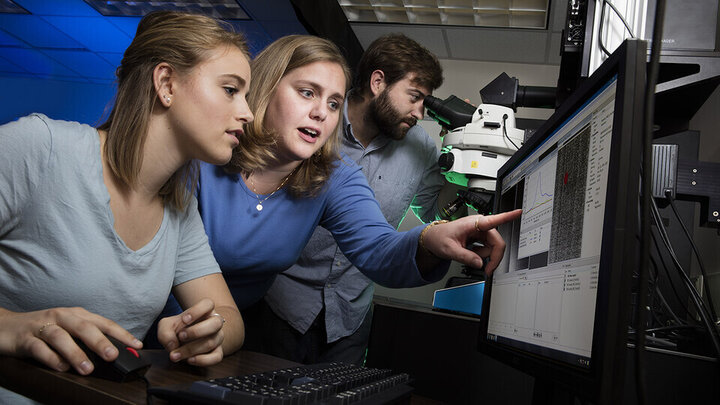
Nicole Iverson (center), assistant professor of biological systems engineering at Nebraska, works with then-undergraduate Janelle Adams and graduate student Eric Hofferber in August 2016. The Iverson Lab has earned a $1.77 million grant from the Department of Health and Human Services to make nitric oxide sensors easy to use and to utilize them to study both healthy and diseased cells.
Craig Chandler / University Communication and Marketing

Lincoln, Neb. —A University of Nebraska–Lincoln research team led by Nicole Iverson has earned a $1.77 million grant from the Department of Health and Human Services to make nitric oxide sensors easy to use and to utilize them to study both healthy and diseased cells.

Nitric oxide is an important molecule in living systems, but relatively little is known about it. Scientists have discovered that when a patient is having a heart attack, giving them a pill that releases nitric oxide opens their blood vessels and helps with their symptoms. Nitric oxide is also involved in inflammatory reactions — everything from a cut finger to cancer.

Share This Article