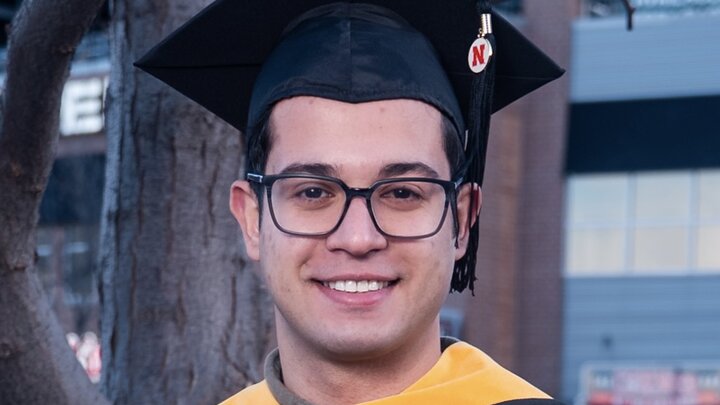
Ultrasound has long enabled doctors to peer inside the body and treat certain conditions without a scalpel. Now, researchers envision a next frontier of sound wave-based technologies for targeted drug delivery, blood clot dissolution, surgeries that spare healthy tissue and beyond.
But first, they must answer the longstanding question of how complex fluids inside the human body behave under the influence of sound waves.
Nitesh Nama of the University of Nebraska–Lincoln will help answer that question with a five-year, nearly $550,000 grant from the National Science Foundation’s Faculty Early Career Development Program. Drawing on his diverse expertise in applied mathematics and mechanical and biomedical engineering, Nama will develop open-source computational software that accurately captures how biological fluids respond to ultrasound. The software will help researchers design more sophisticated ultrasound-based medical treatments by improving their understanding of how sound waves interact with the fluids carrying energy and medicine through the body.