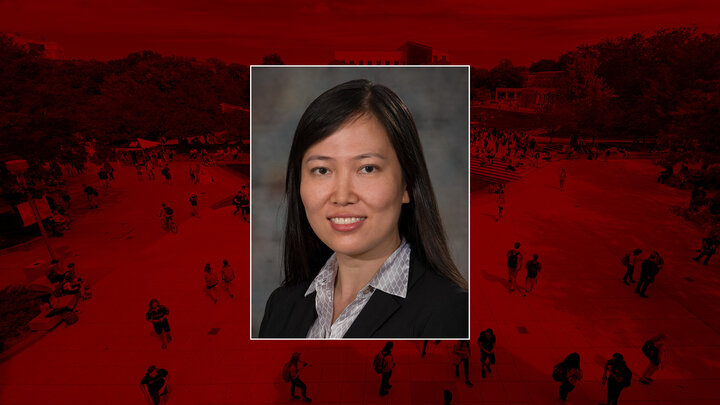
Juan Cui and researchers in the School of Computing are launching a major new effort to better understand how skeletal muscle responds to activity, stress, aging, and recovery.
With a three‑year, $525,000 grant from the National Science Foundation, Associate Professor Juan Cui is leading an interdisciplinary team to build a “digital twin” of skeletal muscle — a dynamic computational model that can simulate how muscle adapts under different physiological conditions.
The project, developed in collaboration with partners in Nutrition and Health Sciences at Nebraska and Kinesiology at Auburn University, will integrate biological data, mathematical modeling, and artificial intelligence to generate more accurate, interpretable predictions of muscle function. The work lays the foundation for future advances in rehabilitation, healthy aging, and precision health.
Read the full story to learn how the team’s Skeletal Muscle Adaptive Analysis, Assimilation, and Augmented Digital Twin (SMA³‑DT) could reshape biomedical research.


