With scientific breakthroughs, there is often a "eureka" moment when a researcher first realizes a process or technology can solve a problem. It’s no different with breakthroughs supporting the safety and well-being of warfighters. These are moments that make headlines — big discoveries that tell us a better world or a smarter, stronger, safer soldier is possible.
"We often forget the hard work doesn’t end with 'eureka,'" said Marty Sikes, associate executive director of chemical and biological defense programs at the National Strategic Research Institute at the University of Nebraska. "There is an important space between revolutionary discoveries and fielding innovative and timely solutions. This critical space is one that NSRI and its partners are uniquely positioned to fill."
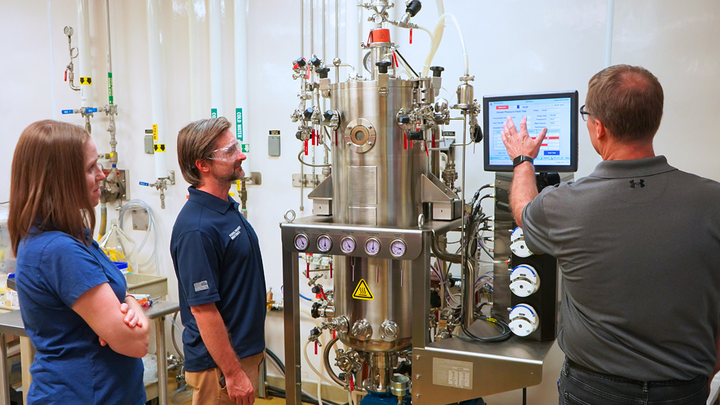
An essential collaborator in helping NSRI close that gap in biological processes contributing to national security is the Biological Process Development Facility in the University of Nebraska–Lincoln's College of Engineering. In addition to a wide range of other biological development work, the facility develops, tests and documents processes that turn raw, one-time laboratory products into practical, large-scale manufacturable defense-related products.