A recurring campus maintenance challenge will soon become a hands-on learning opportunity for construction management students and a Materials & Specifications Paver Project.
Each summer, during UNL move-in at Abel Hall, constant vehicle traffic in front of Kiewit Hall near 1700 Vine Street causes landscaping damage, requiring University Facilities to repair or replace grass and other planted areas. Through conversations with College of Engineering faculty member Emmeline Watson and in collaboration with University Facilities, the site will be addressed permanently with pavers and bricks designed to showcase the university’s block-style letter “N” logo that will not only enhance the green space but give students practical experience with construction materials. The class will complete this project Oct. 12-16.
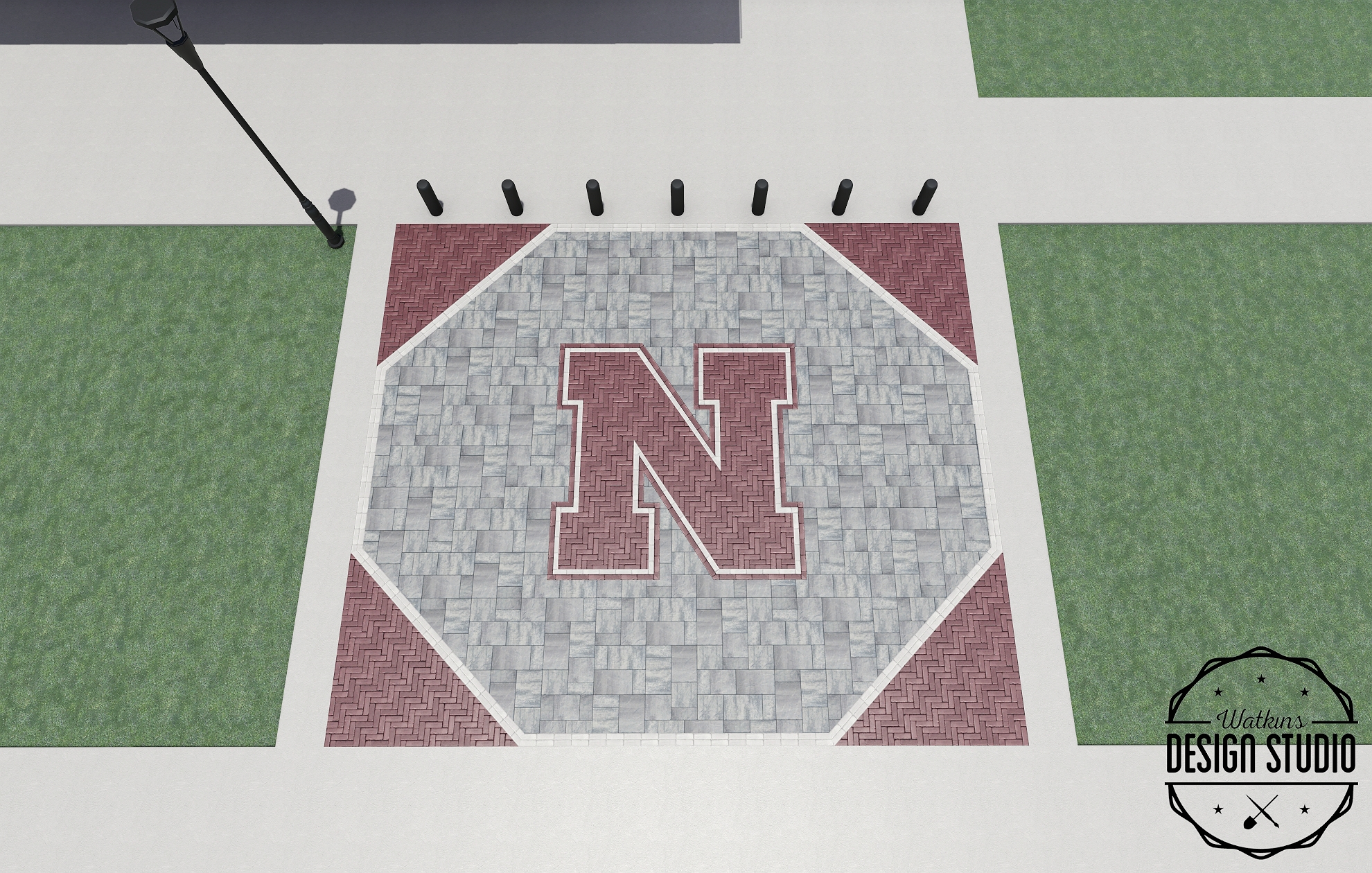
“Instead of creating a classroom exercise simply for the sake of learning, our students will build something that matters,” said Watson, assistant professor of practice in the Durham School of Architectural Engineering and Construction. “This project extends learning beyond technical knowledge and supports the Complete Engineer® program by bringing together collaboration, communication, leadership, and community engagement.”
In the weeks leading up to construction this month, students studied design and construction regulations along with building codes, structural loads, and the structural and thermal properties of building materials. Their coursework also covered clay and concrete masonry, glass masonry, stone, mortar and related products – all skills needed to complete the pavers project.
“The paver installation is more than a construction project. It will stand as a visible reminder of how students can use their knowledge and skills to serve their community and leave a lasting impact on campus,” added Watson, who coordinated the project from start to finish on behalf of the College of Engineering.