Chemical Engineering
The Nebraska Difference
Knowledgeable staff advisors and faculty provide widespread college and career support
Premier Facilities
$115M Kiewit Hall and the Chemical Engineering Unit Operations Laboratory
$80,000
Average starting salary for new graduates (self-reported)
Develop as a Complete Engineer®
Cultivate your potential and develop core competencies that employers are seeking
Program Features
Curriculum
The chemical engineering program provides a strong foundation in mathematics, physics and chemistry. You’ll receive in-depth training in core areas like fluid mechanics, heat transfer, mass transfer, thermodynamics and process design, preparing you to tackle complex challenges across a range of industries.
Hands-On Learning
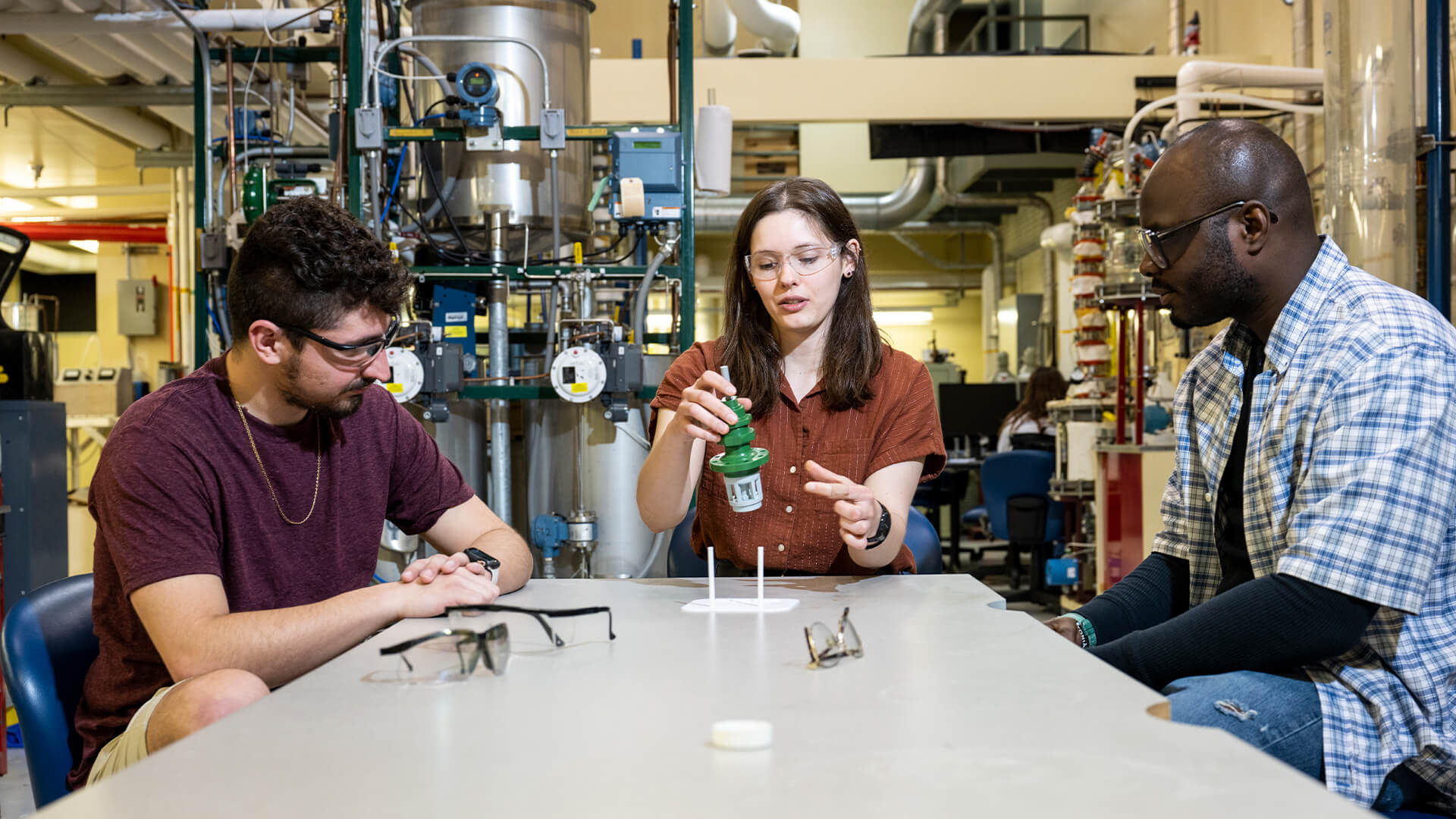
You’ll gain hands-on experience in well-equipped labs, operating equipment and applying classroom concepts. This practical exposure strengthens problem-solving skills so you can tackle real-world engineering and scientific challenges, preparing you for internships and careers.
Career Opportunities
Graduates pursue careers across industries, including biopharmaceuticals, biomedical engineering, medicine, law, materials engineering, nanotechnology, petrochemical, electronics and semiconductors, energy and sustainability, and food and beverage. This versatility allows you to make a meaningful impact in your field and community.
Notable Courses
Introduction to Chemical Engineering I (CHME 113)
Learn about the impact chemical engineers are making on today’s societal issues.
Mass and Energy Balances (CHME 202)
Learn how to apply material and energy balances to solve and analyze a variety of different problems. These principles are at the core of every chemical engineering course.
Chemical Engineering Thermodynamics I (CHME 223)
Learn the foundation of energy, heat and work and how it applies to chemical engineering.
Chemical Engineering Laboratory I (CHME 330)
Gain hands-on experience operating chemical process equipment while applying heat transfer, mass transfer, fluid mechanics and material balances to solve complex problems.
Chemical Process Safety (CHME 420)
Protect people and the environment by analyzing and designing chemical processes using risk assessment and inherently safer design practices.
Chemical Engineering Process Design II (CHME 453)
This capstone design course involves applying all chemical engineering concepts to design a chemical process from the ground up.
Huskers Do Big Things
Internships & Co-operative Education
- Northern Natural Gas, Omaha, NE: Energy distribution
- Cargill, San Francisco, CA: Sea salt processing
- ADM, Columbus, NE: Corn processing
- BASF, Hannibal, MO: Agrichemical production
- UC San Diego Research Experience for Undergraduates, San Diego, CA
- Anheuser-Busch, St. Louis, MO: Fermentation engineering
Careers
- Merck, Elkton, VA: Vaccine manufacturing
- Burns & McDonnell, Chicago, IL: Consulting
- Koch, Beatrice, NE: Fertilizer manufacturing
- Novonesis, Blair, NE: Enzyme manufacturing
- Bayer, Multiple locations: Chemical manufacturing
- AstraZeneca, MD: Biopharmaceutical manufacturing
Graduate Schools
- MIT
- Stanford
- University of Chicago
- University of Michigan
- Purdue University
- University of Nebraska Medical Center
Outside the Classroom
UNL chemical engineering students take part in activities and organizations that build connections with peers, alumni and industry professionals.
ChemE Cube Competition
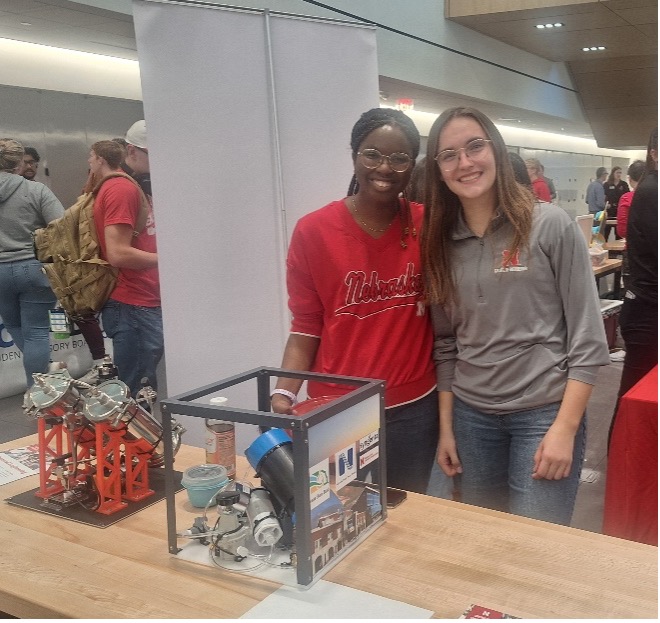
Design, build and present a one-cubic-foot plant based on an annual problem. Teams compete on performance and showcase their work through a one-minute ad, poster and technical pitch at the AIChE national conference.
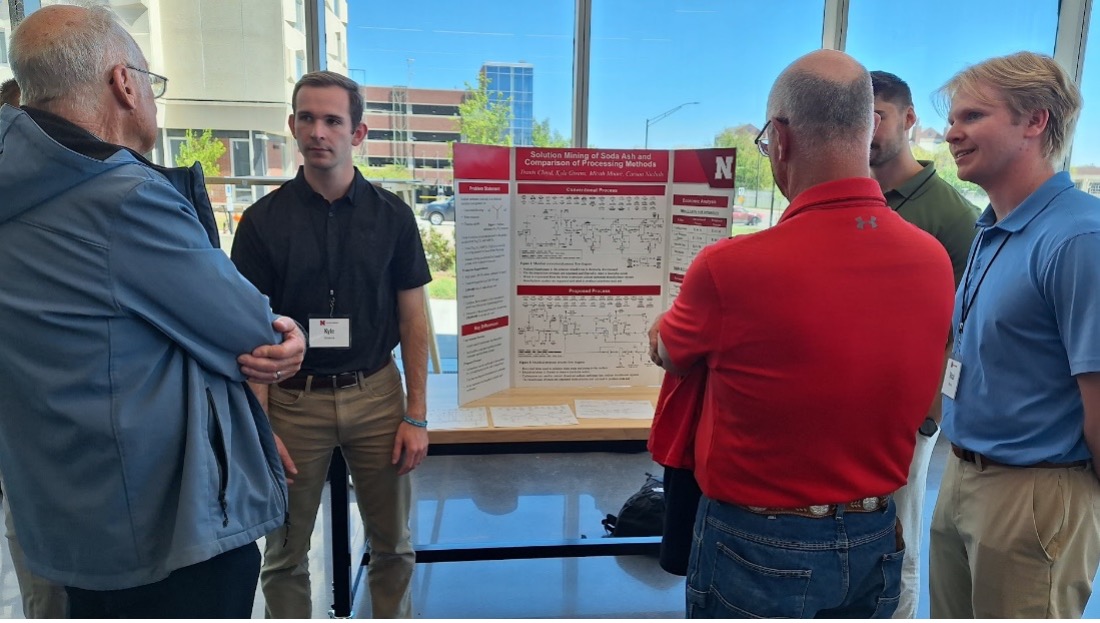
Senior Design Showcase
Seniors present capstone projects from CHME 453 at the Senior Design Showcase. Alumni attend, ask questions and connect with students, offering feedback and insight into real-world engineering expectations.
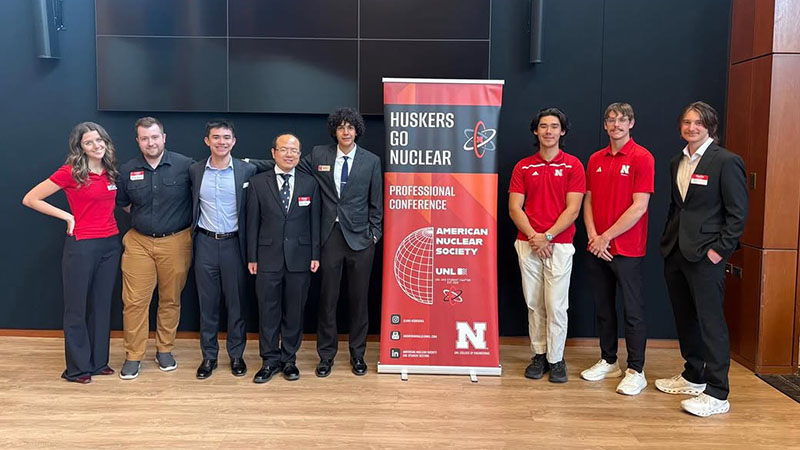
Alumni Mentoring and Guest Presentations
Alumni mentor seniors on capstone projects and return to campus to share career paths and industry experience. Students gain insight, feedback and professional connections that support career preparation.
Plant Tours
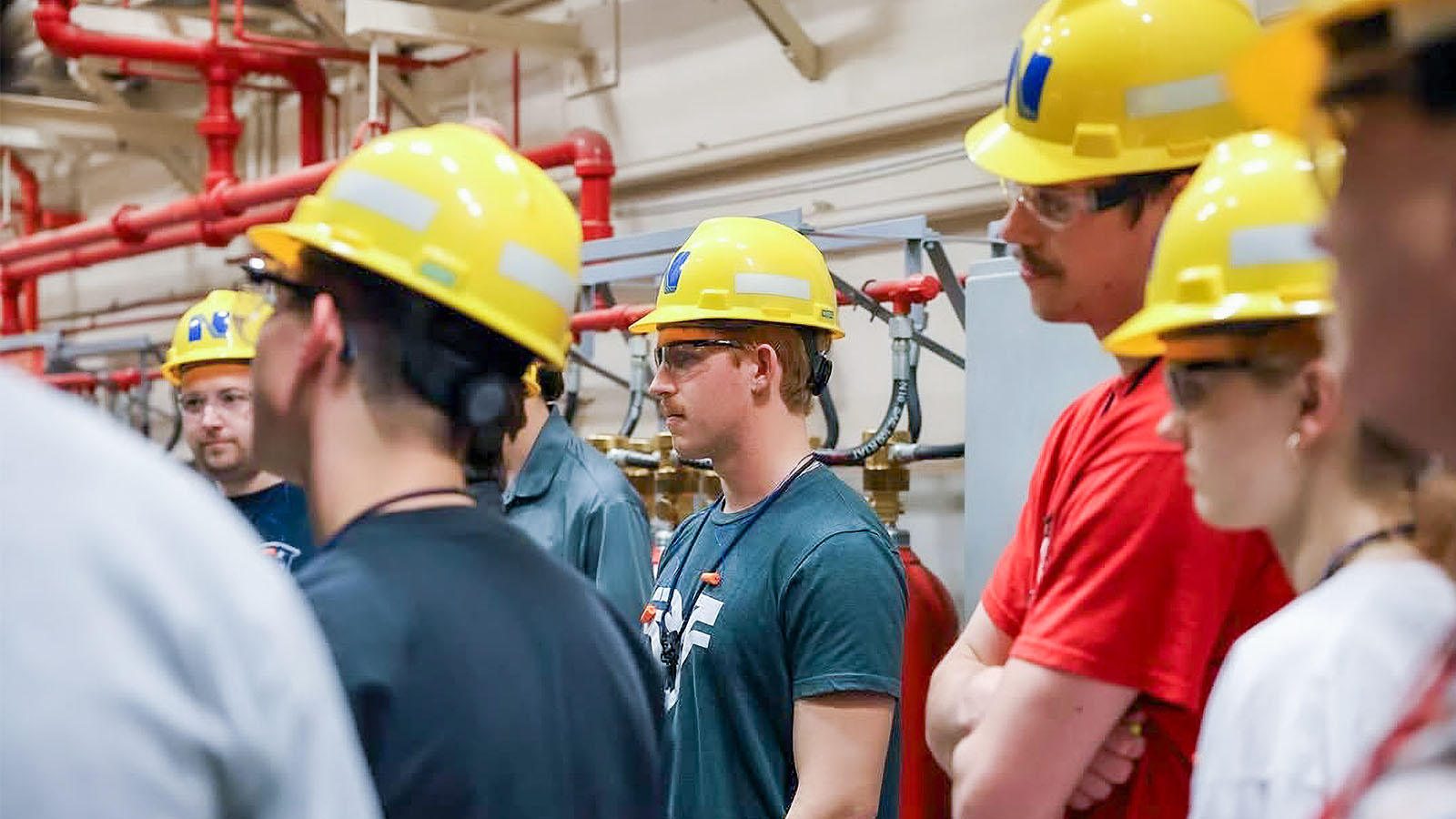
Students tour manufacturing and power generation facilities to see how chemical engineering principles are applied. These experiences connect classroom learning to real-world systems and industry practice.
Featured Faculty
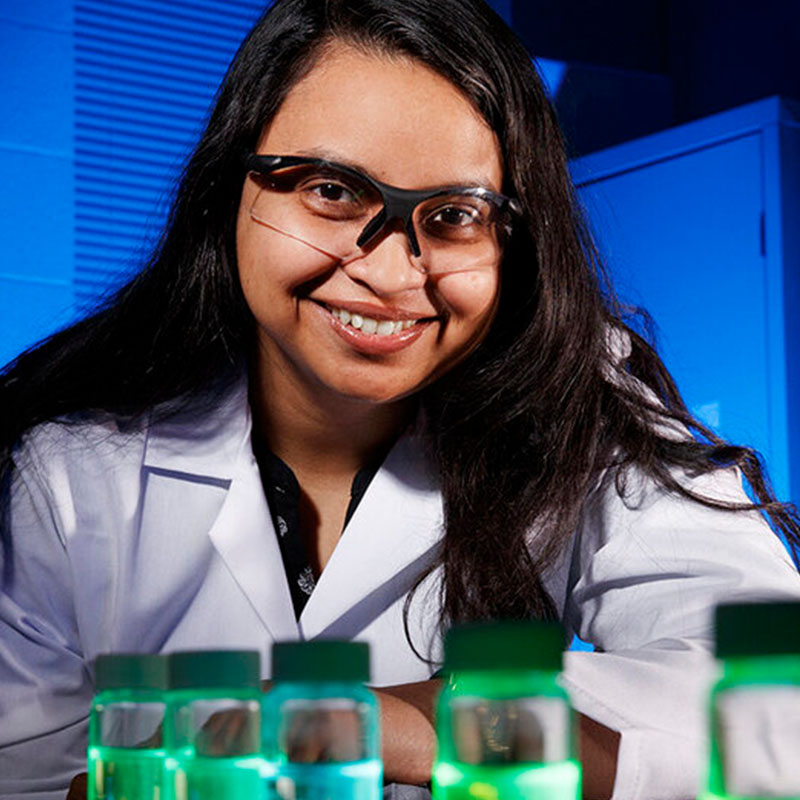
Shudipto Dishari, Ross McCollum Associate Professor
Dr. Shudipto Dishari’s research focuses on impacting energy conversion and storage devices, chemobiosensing and biotechnology applications. Dishari has earned numerous grants and prestigious research awards, as well as College of Engineering, UNL and national teaching accolades. Dr. Dishari has also worked with the college’s Complete Engineer program® and is involved in promoting energy literacy in Nebraska, especially through training K-12 students and teachers.
Academics & Experiential Learning
- Tackle complex challenges in your classes and work with faculty on research focused on solving global problems and improving lives.
- Get hands-on training in the Chemical Engineering Unit Operations Laboratory. Work with pilot-scale equipment used in chemical, biochemical, petroleum and pharmaceutical industries to design experiments and analyze data.
- The Department of Chemical and Biomolecular Engineering awards about 40 scholarships each year to students with strong academic performance.
Career Preparedness
- Participate in paid internships and co-ops to gain on-the-job experience and build lasting professional connections.
- Participate in undergraduate research through the Honors Program, the university-sponsored UCARE program or working directly with faculty in chemical and biomolecular engineering or related departments.
- Additional summer research opportunities funded by national agencies, including NSF, DOE, NASA and NIH.
Community
- Build connections and gain new experiences through 50+ College of Engineering student organizations, including design teams, social groups and professional organizations.
- The UNL student chapter of the American Institute of Chemical Engineers (AIChE) offers professional networking, industry tours, social events and hands-on competition opportunities.
Have Questions? We're Here to Help
If you have questions about the Chemical Engineering major or navigating the application process, contact us.
- Contact Name
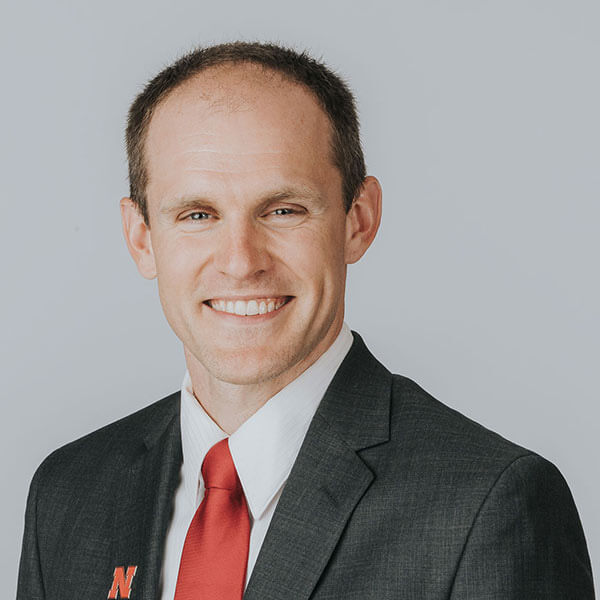
- Jeff Beavers
- Contact Title
- Director of Recruitment and Outreach
- Phone
-
-