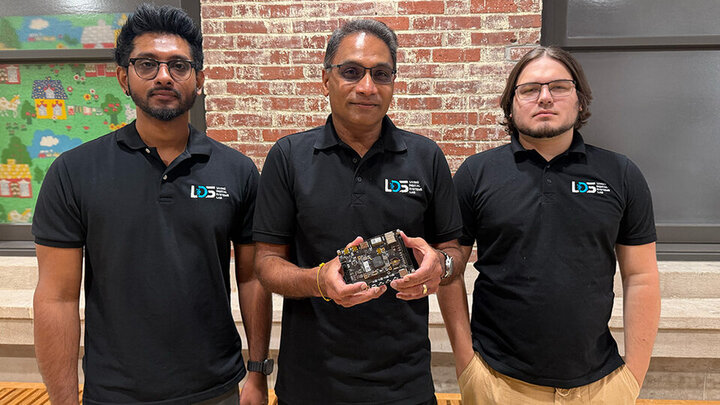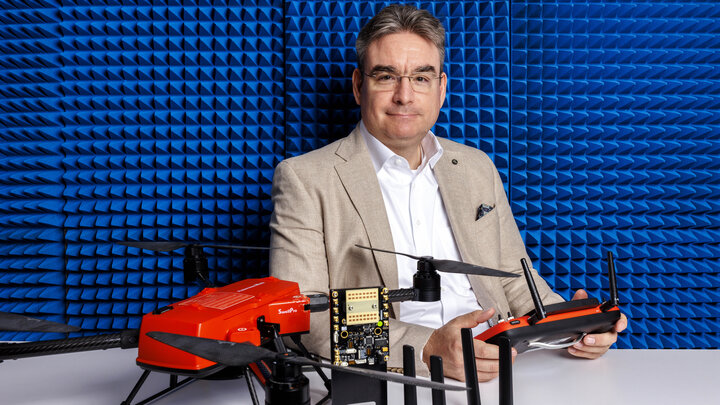
A University of Nebraska–Lincoln researcher is leading a team contributing to the U.S. Department of Energy’s Genesis Mission, an ambitious effort to build the world’s most powerful integrated science discovery platform.
Mehmet Can Vuran’s project was among the inaugural awardees announced July 22 at the Genesis Mission Summit in Washington, D.C. By uniting government, industry, academia and philanthropy, the mission is accelerating breakthroughs in energy, scientific discovery and national security through a new platform that combines artificial intelligence, supercomputing, quantum systems and advanced scientific instruments.
The program’s overarching goal is to harness AI to double the productivity and impact of American research and innovation. Vuran’s team was selected for a Phase I award, part of a category aimed at identifying promising pathways toward transformative scientific capabilities and establishing a foundation for future investment and scale.